The first time I really tried to understand a futures contract, I kept looking at the chart as if the answer had to be hidden somewhere between two candles. Prices moved, numbers changed, and the screen seemed to assume I already knew what every abbreviation meant. I did not.
What finally helped was stepping away from the chart and asking a much less exciting question: what, exactly, is being bought and sold here? Once I understood that, the rest became easier to place.
At its core, Futures Trading involves standardized contracts whose value is tied to an underlying market and whose terms concern a future date. That sentence sounds technical, but the basic idea is familiar. People and businesses have always wanted ways to deal with uncertainty about tomorrow’s prices.
A farmer may worry that grain prices will fall before the crop is sold. An airline may worry about fuel becoming more expensive. A trader may simply believe that a financial index, commodity, currency, or another market will move in a particular direction.
The futures market gives these very different participants a common structure in which they can take or transfer price exposure.
That simplicity is slightly deceptive, though. Futures contracts can be highly leveraged, prices can move quickly, and mistakes in position sizing are often more important than mistakes in prediction. Understanding the mechanics before thinking about profit is, in my view, the sensible place to begin.
What a Futures Contract Really Represents
A futures contract is a standardized agreement linked to the future value or delivery of an underlying asset or financial benchmark. The exchange defines many of its important characteristics in advance, including the contract size, expiration month, minimum price movement, settlement method, and, where necessary, specifications for the underlying commodity.
This standardization is what makes exchange-traded futures practical. Traders do not negotiate a new private agreement every time they enter the market. They choose from contracts whose terms are already known.
I sometimes think of it like entering a train whose route has already been decided. I can choose when to get on and when to get off, but I do not get to redraw the railway line.
The underlying market might be crude oil, natural gas, gold, wheat, corn, an equity index, an interest-rate instrument, or a currency. Different contracts behave differently because their underlying markets respond to different economic forces.
The structure, however, remains recognizable. There is a defined contract, a quoted price, an expiration cycle, and a financial consequence when that price changes.
Why These Markets Were Created
It is easy to encounter futures through the world of online speculation and assume that speculation is their only purpose. Historically and economically, that misses an important part of the picture.
Futures markets developed partly because producers and commercial buyers needed ways to manage price uncertainty. If I grow a crop that will be harvested months from now, I face the risk that prices may fall before I can sell it. If I run a company that needs that crop, my concern may be exactly the opposite.
A futures contract can help transfer some of that price risk.
The producer may use the market to protect against falling prices. The buyer may use it to reduce the uncertainty created by rising prices. Neither side can know exactly what the future will bring, but both can make the financial consequences of certain price movements more manageable.
Then there are speculators.
A speculator usually does not need the physical commodity or commercial exposure behind the contract. The goal is to take a position because the trader expects the price to move.
That difference is important. Hedgers are often trying to reduce an existing business risk, while speculators intentionally accept market risk in the hope of earning a return.
Both groups can participate in the same market for completely different reasons.
Going Long and Going Short
The language around futures can make a basic idea sound more complicated than it is.
Going long means taking a position that generally benefits if the contract price rises. Going short means taking a position that generally benefits if the contract price falls.
The ability to sell a futures contract without first owning the physical asset often surprises beginners. A trader does not need a warehouse full of copper before selling a copper futures contract. The position is in the standardized contract.
That feature is useful for both hedgers and speculators.
A business worried about declining prices can potentially use a short position as a hedge. A trader who believes a market is overvalued may also choose to go short.
The mechanics make both directions accessible, but accessibility should not be confused with ease. Being able to click buy or sell quickly says nothing about whether the trade itself is sensible.
Contract Size Matters More Than the Chart Suggests
One of the first things I would want to know before trading any futures contract is how much money a small price movement actually represents.
A chart might show a move of a few points and make it look insignificant. Depending on the contract, those few points could translate into a meaningful gain or loss.
Every contract has specifications that determine how price movement translates into money. That includes the contract multiplier or unit size and the value of the minimum price increment, usually called the tick.
Imagine a hypothetical contract where every one-point movement is worth $20.
If the market moves 10 points in your favor, the position gains $200 before commissions, fees, and other trading costs. If it moves 10 points against you, the same arithmetic works in reverse.
The important detail is not whether 10 points looks large on the chart. It is what those 10 points mean for the account holding the position.
This is why I would never judge risk by visual distance alone. A stop that appears close on the screen might still represent more money than a trader can reasonably afford to lose.
Margin Is Not the Price of the Contract
Margin is probably one of the most misunderstood parts of futures markets.
When someone buys shares of a stock outright, the relationship between the cash spent and the value purchased is fairly intuitive. Futures work differently because the trader generally posts a fraction of the contract’s notional value as margin.
That margin acts as financial security for the position. It should not be confused with the total value represented by the contract.
Suppose a futures position represents $80,000 of notional exposure, while the margin required to hold it is only several thousand dollars. The trader is still exposed to price changes calculated on the larger contract value.
That is where leverage enters the picture.
A small percentage move in the underlying market can create a much larger percentage change relative to the money committed as margin. It can work in the trader’s favor, which is what makes leverage attractive.
It can work against the trader just as efficiently.
I find it useful to think of leverage as an amplifier rather than an advantage. It makes the financial effect of the market louder. It does not care whether the original prediction was good or bad.
Initial Margin and Maintenance Margin
Futures accounts generally involve different margin thresholds.
Initial margin is the amount required to establish or carry a position under the relevant broker and clearing requirements. Maintenance margin represents a level below which additional action may be required.
If losses reduce the account equity too far, a trader may need to add funds or reduce exposure. Depending on the brokerage arrangement and market conditions, positions can also be liquidated.
This is one of the reasons futures losses can feel much faster than beginners expect.
A trader might correctly believe that a market will eventually recover, but the account still needs enough capital to survive the movement that happens before that recovery. Being right later does not necessarily help if the position was too large today.
I have always found that distinction more useful than the usual discussions about predicting direction.
The market can eventually prove your analysis correct and still punish your position sizing.
Why Daily Gains and Losses Matter
Futures positions are marked to market.
In practical terms, changes in market value are reflected in the account rather than being treated as an abstract result that matters only at some distant expiration date. Gains and losses become financially relevant as the market moves.
That makes the experience immediate.
A position that looked manageable on paper can suddenly feel quite different after several unfavorable moves. This is where discipline stops being a nice concept and becomes part of survival.
People often imagine that emotional trading begins because someone lacks intelligence. I do not think that is usually the problem.
Pressure changes behavior.
A trader who planned calmly before the market opened may begin moving stops after a loss. Someone who promised to risk a fixed amount may increase the next position because recovering the previous loss suddenly feels urgent.
Nothing about the contract changed. The trader did.
Practice can be valuable precisely because these tendencies are difficult to discover by reading definitions.
Expiration Is Part of the Trade
Unlike a share of stock that can potentially be held indefinitely, a futures contract belongs to a particular expiration cycle.
That matters.
A trader might be following one contract month while liquidity gradually moves toward the next. Prices between different contract months are not always identical, and the gap can reflect expectations about supply, demand, financing, storage, interest rates, and other market conditions.
Many traders close their positions before expiration. Others roll exposure by exiting one contract month and entering another.
Some futures contracts use cash settlement. Others can involve physical delivery procedures.
A retail trader may have no intention of taking delivery of anything, but intentions do not replace contract rules. Knowing how a specific contract settles should happen before entering the trade, not the night before expiration.
I would put the expiration date somewhere visible.
It is a small habit, but small habits tend to matter in markets where a forgotten detail can become expensive.
Contango and Backwardation Without the Headache
Sooner or later, anyone studying commodity futures comes across the words contango and backwardation.
They sound more intimidating than the idea behind them.
Different expiration months can trade at different prices. When later-dated contracts trade above nearer contracts, the market curve is commonly described as being in contango.
When later contracts trade below nearer contracts, the curve is commonly described as backwardated.
Those differences can reflect storage costs, financing, immediate scarcity, expectations about future supply, and other factors.
For a short-term trader, the shape of the curve may not always be the main concern. For someone holding exposure across expiration cycles, however, the difference between contract months can have a meaningful effect.
This is another example of why understanding the instrument matters.
The chart alone does not tell the whole story.
A Simple Futures Trade Example
Consider a fictional stock index futures contract trading at 5,000.
Suppose each index point is worth $10. A trader believes the market will rise and buys one contract.
If the contract moves from 5,000 to 5,025, the position gains 25 points. At $10 per point, that represents $250 before commissions and fees.
If the market moves instead to 4,970, the position loses 30 points. That would represent a $300 loss.
The mathematics are easy.
The harder question is whether $300 was an acceptable loss for that particular trader.
For an account of $100,000, the answer may be one thing. For an account of $2,000, it may be something entirely different.
This is where position sizing becomes more important than excitement.
A market setup does not know the size of your account. The trader has to make that adjustment.
Futures Versus Stocks
Stocks and futures can both appear on trading charts, but they represent different financial relationships.
Buying a share generally means owning a small interest in a company. A futures contract provides exposure through a standardized agreement connected to an underlying market or benchmark.
Stocks do not normally expire simply because a particular month ends. Futures contracts do.
Margin also behaves differently.
The leverage built into futures can create significant market exposure from a comparatively small deposit. That means capital efficiency can be high, but so can the consequences of poor risk control.
The screens may look similar. The obligations underneath them are not.
Futures Versus Options
Options introduce another structure.
An option buyer generally purchases a right connected to buying or selling an underlying asset under specific conditions. Futures positions carry a different contractual relationship.
Options are also influenced by variables beyond simple directional movement, including time remaining before expiration and implied volatility.
That means an option can behave differently even when the trader correctly predicts the general market direction.
Futures pricing is not identical to options pricing, and margin should not be confused with an option premium.
I think this distinction matters because new traders sometimes group every leveraged product into the same mental box. They are better understood separately.
Futures Versus Spot Markets
Spot markets are generally associated with transactions based on the current market price, while futures involve standardized contracts linked to a future settlement period.
At first glance, a spot chart and a futures chart may appear almost identical.
Underneath, they can behave differently.
The relationship between spot and futures prices can be affected by financing, storage, interest rates, supply expectations, demand conditions, and the time remaining until contract expiration.
That difference becomes particularly visible in certain commodity markets.
A trader who understands only the chart pattern and ignores the structure underneath it is working with half the information.
What Moves Futures Prices?
There is no single answer because different contracts respond to different economic forces.
Energy markets can react to production, inventories, weather, transportation constraints, political events, economic growth, and changes in demand.
Agricultural contracts can react to planting conditions, crop quality, rainfall, drought, exports, inventories, and changing expectations about harvest size.
Financial futures live in another ecosystem.
Equity index contracts may react to corporate earnings expectations, economic growth, inflation data, interest rates, and broad investor sentiment. Currency and interest-rate futures can be especially sensitive to central-bank policy and economic reports.
Then there is positioning.
Sometimes prices move dramatically because traders already in the market are forced to adjust. Stops are triggered, leveraged positions are liquidated, hedges are changed, and liquidity becomes thinner.
That is why I am suspicious of explanations that reduce a large market move to one neat headline.
Markets rarely move with that kind of literary discipline.
Why Leverage Deserves Respect
Leverage attracts people because it makes capital more efficient.
It also creates the conditions for rapid losses.
If a relatively small margin deposit controls a much larger notional position, even a modest market movement can have a significant effect on account equity.
This is not an unusual accident. It is part of the design of the instrument.
The mistake is assuming that because a broker allows a certain position size, that size is sensible.
Those are two completely different questions.
A broker’s margin requirement tells me what the account may be permitted to hold. My risk plan should tell me what I can reasonably afford to hold.
I would trust the second number more.
Why Beginners Often Trade Too Large
Large positions make ordinary market movements feel important.
That sounds obvious, but it changes behavior more than people expect.
If every small candle creates a painful change in account equity, the trader becomes hyperaware of noise. Normal fluctuations start to look like emergencies.
Stops get moved.
Good setups are closed too early.
Bad positions are held because realizing the loss feels unbearable.
The trader may begin watching profit and loss rather than watching the market.
Trading smaller does not guarantee success, but it can create enough psychological room to make decisions according to a plan instead of according to the balance flashing on the screen.
That breathing room has value.
Risk Management Is More Than a Stop Loss
A stop order matters, but risk management begins before the order reaches the market.
The contract has to be suitable for the account. The position size has to make sense. The planned exit has to translate into an amount of money the trader can tolerate losing.
Market conditions matter too.
A stop may not always execute at precisely the expected price during extremely fast or illiquid conditions. Slippage is part of trading, particularly when markets move quickly.
Then there is daily risk.
A trader can manage individual positions reasonably well and still do serious damage by taking too many trades after losing.
I prefer thinking about risk as a budget.
Once too much of that budget has been spent, the appropriate trade may be no trade at all.
Why Learning Comes Before Strategy
Most beginners want the strategy.
I understand that. Learning contract specifications feels dull compared with discovering a pattern that supposedly predicts the next move.
The order should probably be reversed.
Before studying a strategy, I would want to know the contract size, tick value, margin requirements, expiration date, trading hours, settlement method, and typical volatility of the instrument.
I would also want to understand what a realistic loss looks like.
Only then does an entry strategy begin to have proper context.
A strategy cannot compensate for misunderstanding the product being traded.
It can produce a beautiful signal on the chart and still be unsuitable for the trader’s account.
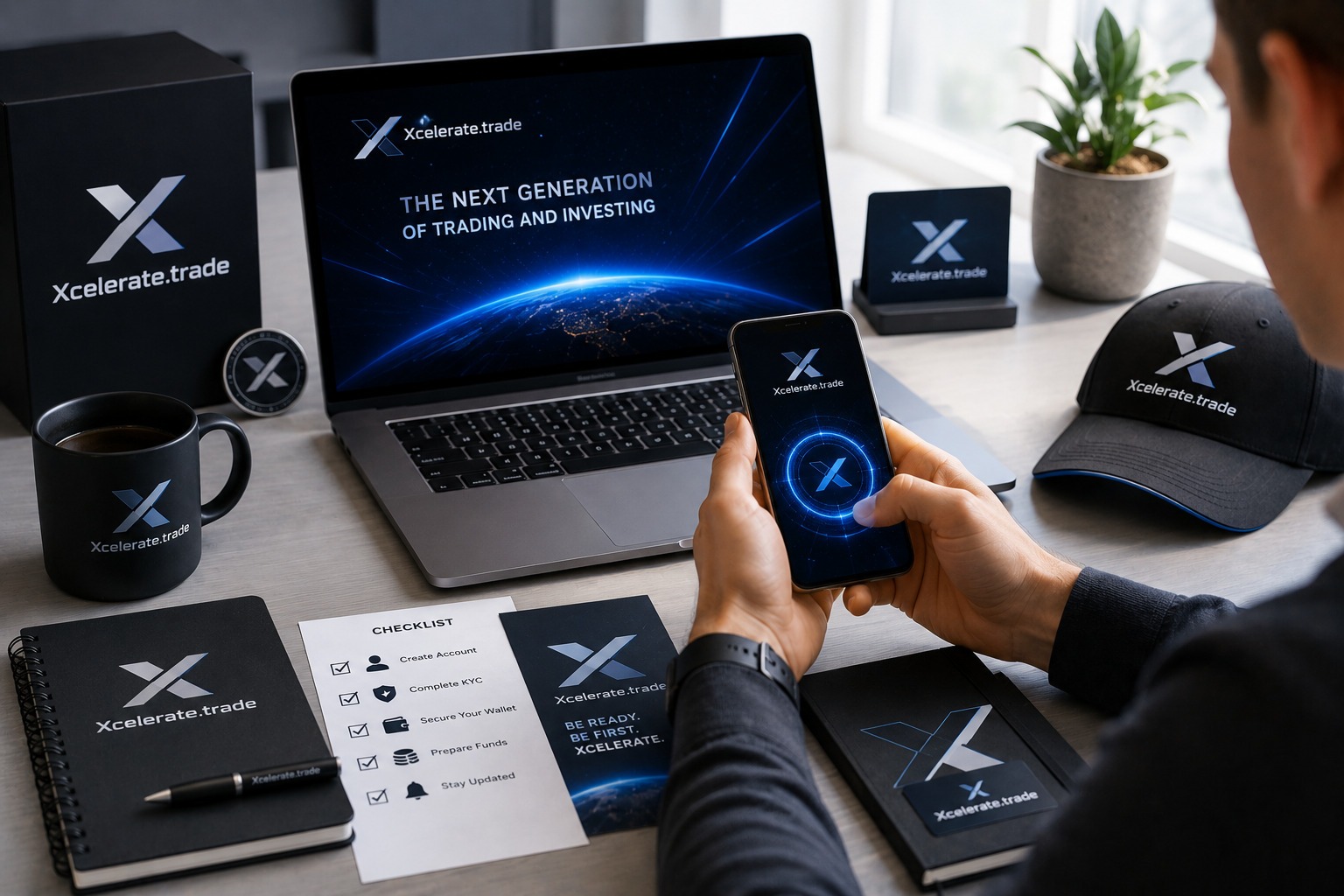
Where Xcelerate Trade Fits Into the Learning Process
Xcelerate Trade approaches trading education as something broader than memorizing a handful of setups.
Its ecosystem includes learning material, practice environments, trading concepts, execution frameworks, risk education, psychology, strategies, indicators, and automation-related tools.
That combination makes sense to me because trading skill develops in layers.
First, I need to understand what the market instrument does. Then I need to see how I behave while using it.
Reading can help with the first part. Practice helps expose the second.
Xcelerate.Trade can therefore be useful as a structured learning environment rather than as a replacement for personal judgment.
That distinction matters.
No platform can decide how much risk is suitable for every individual. No indicator can know whether someone is trading with genuinely disposable capital or with money needed next month.
Education works best when it improves the quality of those decisions.
Why Structured Education Helps
The internet contains an almost absurd amount of trading information.
That abundance can become a problem.
A beginner can watch one video about trend trading in the morning, another about mean reversion at lunch, then spend the evening learning an entirely different approach built around order flow.
By the end of the day, there is more information and less understanding.
A structured educational path reduces some of that noise.
Xcelerate Trade presents learning material in a way designed to connect foundations with execution, risk, and trader psychology. For someone who needs a clearer route through the subject, that structure can be more useful than collecting disconnected techniques.
I have always thought learning becomes easier when new concepts have somewhere to attach.
Margin makes more sense once contract value is understood. Position sizing makes more sense once tick value is clear.
Strategy makes more sense after both.
Why Replay Can Be So Valuable
Reading about a market situation and living through it are different experiences.
Replay tools help narrow that gap.
A trader can work through historical market sessions, make decisions, observe how price develops, and evaluate whether the original plan was followed.
There is no guarantee that historical market behavior will repeat. That is not the point.
The value lies in repetition.
A person can see how often they enter late, how they react after a loss, whether they become impatient during quiet periods, and whether they abandon rules when the market moves quickly.
These are difficult things to learn from theory alone.
Xcelerate.Trade’s practice-oriented environment can help turn abstract trading principles into decisions that have to be made in sequence.
That is where many weaknesses become visible.
The Strange Difference Between Knowing and Doing
I can know that moving a stop is a bad idea and still feel tempted to move it.
I can understand position sizing and still want to increase risk after two winning trades.
This gap between knowledge and behavior is one of the more interesting parts of trading.
It is also one reason simulation and replay matter.
A trader can practice the process without immediately putting real capital at risk. That does not reproduce every emotion of live trading, but it provides a place to develop habits before the consequences become more serious.
The goal is not to become perfect.
The goal is to notice predictable mistakes earlier.
That is progress, even if it looks less impressive than a screenshot of a winning trade.
How I Would Use Xcelerate.Trade as a Beginner
I would begin with the educational material dealing with market structure, contract mechanics, execution, and risk.
I would resist the temptation to jump immediately toward sophisticated strategies.
Once I could explain the basic contract mechanics in ordinary language, I would move into practice and replay. I would pay attention to whether my decisions matched what I claimed my strategy was supposed to do.
That difference can be uncomfortable.
It is also useful.
After building some consistency, I would begin evaluating strategies and indicators. I would want to understand the reason behind each signal instead of simply following it.
Only after that would automation make sense to me.
Software can execute a weak process very consistently.
That does not make the process good.
Indicators Are Tools, Not Decisions
Indicators can summarize price behavior in useful ways.
They can measure momentum, trend, volatility, volume, or relationships between different pieces of market data.
What they cannot do is understand the circumstances of the person using them.
An indicator does not know whether the position is oversized. It does not know whether the trader is exhausted, distracted, or trying to recover yesterday’s loss.
It also does not know whether current market conditions match those in which the strategy was originally tested.
Xcelerate Trade includes access to strategies and indicators within its broader ecosystem.
I would treat them as analytical tools.
A signal should begin a decision process, not replace one.
Automation Can Improve Discipline and Multiply Mistakes
Automation is attractive because emotions can interfere with manual execution.
A rule-based system can follow predefined instructions without becoming impatient, frightened, or overconfident.
There is a catch.
Automation does exactly what it is designed to do, including when the underlying logic is poor.
A flawed strategy does not become safer because software executes it faster.
Market regimes can change. Liquidity can change. Volatility can change. Assumptions that worked in historical testing may stop working.
That means automated trading still needs supervision, testing, risk limits, and an understanding of what the system is actually doing.
Xcelerate.Trade’s automation-related tools may be valuable for traders who have already developed that foundation.
I would not use automation as a shortcut around learning.
What a Trading Journal Can Reveal
I would keep a journal while practicing, but I would not turn it into a novel.
The useful details are often surprisingly plain.
Did I take the trade I planned? Did I use the correct position size? Did I respect the stop? Did I enter because my conditions were present or because I was bored?
Profit and loss matter, obviously.
They do not tell the entire story.
A profitable trade can still be badly executed. A losing trade can be perfectly reasonable if it followed a tested process and stayed within predetermined risk.
Over time, these records can show patterns.
Perhaps losses become larger late in the session. Perhaps profitable mornings are regularly damaged by unnecessary afternoon trades.
Those observations are more valuable than vague memories.
Memory tends to forgive us.
A written record usually does not.
How to Think About Trading Strategies
I prefer viewing a trading strategy as a hypothesis.
It proposes that under certain market conditions, a particular pattern or behavior may provide an edge over a sufficiently large sample.
That edge is never the same thing as certainty.
A strategy can lose several trades in a row and still remain statistically valid. It can also perform well for months before changing market conditions expose weaknesses.
This is why constantly switching strategies can become destructive.
If every short losing period causes the trader to abandon one method and search for another, there may never be enough consistent data to evaluate anything properly.
Xcelerate Trade can provide access to different systems and educational tools, but choice has to be handled carefully.
More strategies do not automatically create more clarity.
Sometimes they simply provide more opportunities to change one’s mind.
The Role of Trading Psychology
Trading psychology is sometimes discussed in language that feels almost mystical.
I think it is much more ordinary.
People dislike losing money. They enjoy being right. They compare themselves with others and become impatient when someone else appears to be making money faster.
Put those normal human tendencies beside leverage and instant price feedback, and strange decisions begin to make sense.
Fear of missing out can push traders into late entries.
Loss aversion can make them hold bad positions too long. Overconfidence can make a winning streak look like evidence of permanent skill.
A good educational environment should address these behaviors rather than pretending that technical analysis solves them.
Xcelerate.Trade includes trader psychology within its learning approach, which is sensible because execution is partly a behavioral problem.
Knowing what to do and doing it repeatedly are different skills.
Trading With Risk Capital
One principle deserves especially plain language.
Money required for rent, food, debt payments, medical expenses, education, or emergency savings should not be treated casually as trading capital.
Leveraged markets can generate losses quickly.
Someone who needs the trading account to pay next month’s bills begins every decision under pressure.
That pressure changes behavior.
The trader may hold losing positions because taking the loss feels impossible. They may increase risk because a small profit does not solve the financial problem quickly enough.
Using genuinely disposable risk capital does not remove market risk.
It prevents market risk from becoming a household emergency quite so easily.
Can You Lose More Than Your Initial Margin?
Yes, it is possible.
Margin is not necessarily the maximum amount a trader can lose.
Because futures contracts create leveraged exposure, unfavorable market moves can produce losses that exceed the amount initially posted to support a position.
The exact outcome depends on the contract, market conditions, brokerage policies, account structure, and execution.
Fast-moving markets deserve particular respect.
Prices can move through expected exit levels, and actual execution may differ from the price a trader had in mind.
This is another reason I would never treat the margin requirement displayed by a platform as a convenient measure of acceptable risk.
The two numbers answer different questions.
The Importance of Choosing the Right Contract Size
Not every contract is appropriate for every account.
Some markets offer smaller contract versions that provide lower dollar exposure per point or tick. These can sometimes make risk management more practical for smaller accounts.
Smaller contracts are not automatically safe.
They simply make it possible to adjust position size more precisely.
I would still calculate the potential loss before entering.
If an ordinary stop requires risking an uncomfortable amount of money, the contract may be too large for the account regardless of how attractive the setup looks.
Walking away from a trade is a position too.
It just does not appear on the chart.
Why Liquidity Matters
Liquidity describes how easily market participants can transact without causing unusually large price changes.
Highly liquid futures contracts tend to have active participation and tighter differences between buying and selling prices.
Less liquid markets can behave differently.
Spreads may be wider. Orders can experience more slippage. Price movement can become less predictable when fewer participants are available at each level.
Liquidity also changes during the trading day.
A contract might trade actively during its main session and become thinner during quieter hours.
This is why trading hours matter beyond simple convenience.
The same technical setup can carry different execution risk depending on when it appears.
Economic News and Volatility
Major economic releases can change futures prices quickly.
Inflation data, employment numbers, central-bank decisions, inventory reports, crop estimates, and other scheduled announcements can produce sudden changes in volatility.
A chart can look quiet seconds before the release.
Then the character of the market changes.
Some traders actively seek those conditions. Others deliberately avoid them.
Neither approach is automatically correct.
What matters is knowing when important information is scheduled and understanding that normal assumptions about price movement and execution may temporarily stop behaving normally.
Surprise is expensive when leverage is involved.
Why No Platform Can Remove Market Risk
A good trading platform can organize information, improve practice, help with execution, or provide useful analytical tools.
It cannot know the future.
That sounds almost silly when written down, but trading marketing occasionally makes people forget it.
Xcelerate Trade can help someone understand concepts, work through educational material, practice decisions, explore strategies, and become more familiar with the mechanics of trading.
That is valuable when expectations remain realistic.
The goal of education is not to make uncertainty disappear.
It is to make the person facing uncertainty better prepared.
How I Would Judge Progress
I would not judge learning purely by account profit.
Not at first.
I would look at whether I understand the instrument better than I did a month ago. I would look at whether my position sizing is consistent and whether my losses stay close to the amount planned before entry.
I would also watch how often I break my own rules.
If those violations become less frequent, something useful is happening even if the short-term results remain uneven.
Markets contain randomness.
A good decision can lose money. A bad decision can make money.
That is inconvenient, because it means a single result teaches very little.
Process becomes visible only across repetition.
What Xcelerate Trade Can and Cannot Do
Xcelerate Trade can offer structure.
It can place education, practice, strategies, indicators, and trading tools in an environment where a learner can explore how different parts of trading fit together.
Xcelerate.Trade can also reduce some of the fragmentation that comes from learning through random pieces of online content.
What it cannot do is replace individual risk judgment.
It cannot guarantee that a strategy will remain profitable, that a trader will behave rationally under pressure, or that market conditions will cooperate.
I would be suspicious of any educational product that claimed otherwise.
A platform becomes useful when it helps the trader ask better questions.
That is a much more realistic standard.
Learning Futures Without Getting Lost in the Noise
The hardest part of learning futures is often deciding what deserves attention.
Charts are visually persuasive. Strategies are interesting. Indicators provide neat answers.
Contract mechanics are quieter.
Yet those quieter details often decide whether a trader understands the actual financial risk being taken.
I would learn the contract before trying to conquer the market.
I would learn tick value before optimizing an entry. I would understand margin before considering leverage an advantage.
Then I would practice.
Only after that would I start adding layers.
This slower path may feel less exciting, but markets do not reward excitement simply because it is sincere.
A More Practical Way to Think About Success
I no longer think the most useful question is whether someone can predict where the next candle goes.
A better question is whether the trader knows what to do when the prediction is wrong.
That shift changes almost everything.
It moves attention from certainty toward preparation. It makes position size matter more than confidence and makes risk limits more important than a persuasive chart pattern.
This is also where structured learning through Xcelerate Trade can be useful.
A platform that combines education with opportunities for practice can help a learner connect theory with behavior.
The value is not in removing uncertainty.
It is in becoming less surprised by it.
Frequently Asked Questions
What is a futures contract in simple terms?
A futures contract is a standardized agreement whose value is connected to an underlying market and a specified future period. Exchanges define important details such as contract size, expiration, minimum price movement, and settlement procedures.
Traders can use these contracts to speculate on price changes or to manage existing price risks. The important point is that a futures position represents contractual market exposure rather than direct ownership of the underlying asset in the same way that owning a share represents ownership in a company.
How does leverage work in futures markets?
Leverage allows a trader to control a contract with a notional value greater than the amount posted as margin.
This means relatively small market movements can create meaningful changes in account equity. The same mechanism that can amplify profits can amplify losses, so leverage should be understood as increased exposure rather than free buying power.
Is margin the most I can lose?
No.
Margin is money required to support a leveraged position, not necessarily a maximum-loss amount. Depending on market conditions, contract characteristics, brokerage rules, and the size of an adverse move, losses can exceed the amount initially committed as margin.
That is why position size should be based on planned risk rather than simply on the maximum number of contracts a broker allows.
Do I need to hold a futures contract until expiration?
Usually, no.
Many traders close their position before expiration by entering an offsetting transaction. Traders who want to maintain exposure for longer may roll from the current contract into a later expiration month.
The exact rules depend on the contract.
Some contracts settle in cash, while others can involve physical delivery procedures. Anyone trading a contract should understand those details before approaching expiration.
Can beginners use Xcelerate Trade to learn?
Xcelerate Trade can be used as a structured environment for learning concepts, practicing trading decisions, studying risk, and exploring strategies and analytical tools.
For a beginner, I would start with foundational education and practice before moving toward more advanced indicators or automation. A learning platform can improve understanding, but it should not be treated as a substitute for personal risk assessment or independent verification of contract rules.
Is Xcelerate.Trade a guarantee of profitable trading?
No trading platform, educational program, indicator, strategy, or automation system can guarantee future profits.
Markets change, strategies experience losing periods, and trader behavior has a major influence on results. I would judge Xcelerate.Trade primarily by how well it helps a learner understand market mechanics, practice consistently, and make more deliberate risk decisions.
How much money do I need to start trading futures?
There is no universal amount that is appropriate for everyone.
The answer depends on the specific contract, broker requirements, position size, volatility, planned stop distance, and the amount of risk the trader can genuinely afford. The minimum balance permitted by a broker is not necessarily a sensible account size for trading that contract.
I would work backward from risk rather than forward from available leverage.
What should I learn before placing a live futures trade?
I would want to understand the contract size, tick value, expiration date, settlement method, trading hours, margin requirements, typical volatility, and the financial effect of my planned stop.
I would also want enough practice to know how I react when several trades go wrong in a row. Technical knowledge matters, but behavior under pressure is part of the skill too.
Are futures suitable only for short-term traders?
No.
Futures are used by many kinds of market participants, including commercial hedgers, institutional investors, asset managers, and speculators with different time horizons.
The appropriate holding period depends on the purpose of the position, the contract being used, risk tolerance, and the strategy. Expiration cycles mean longer-term positions require more attention to contract selection and rolling than simply buying an asset and forgetting about it.
Can practice trading prepare me completely for live markets?
Practice can be extremely useful, but it cannot reproduce every aspect of trading real money.
Replay and simulation can teach execution, contract behavior, risk procedures, and consistency. Live trading adds emotional pressure, real slippage, real financial consequences, and sometimes different decision-making behavior.
I would see practice as preparation, not proof that future live results will match simulated ones.
Final Thoughts
A futures screen can still look intimidating after you know what every number means.
Perhaps that is healthy.
These markets combine standardized rules with an outcome nobody can standardize. The contract tells us exactly what one tick is worth, when expiration occurs, and how exposure is structured, but it cannot tell us where the next important move will go.
Xcelerate Trade can help make the mechanics less opaque by connecting education, practice, risk concepts, strategies, and trading tools within a broader learning environment.
Xcelerate.Trade becomes most useful, in my view, when it is treated as a place to build understanding rather than a machine for producing certainty.
I would begin slowly.
I would learn what one contract actually represents, calculate the financial consequence of being wrong, practice until the mechanics feel ordinary, and only then think seriously about sophistication.
The market will keep moving whether I understand it or not.
I would rather arrive at the screen knowing exactly what my next click means.